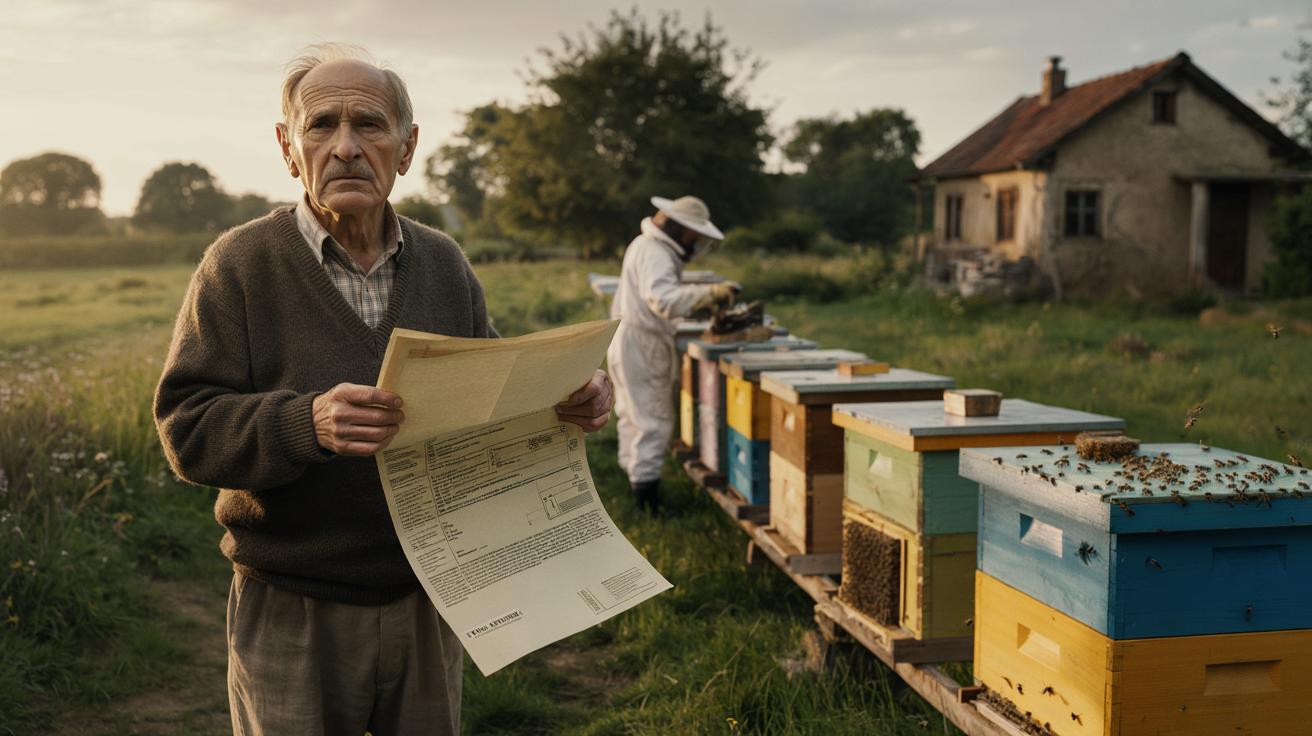
The meadow behind his small house had always been a place for silence. A strip of grass where the retiree walked slowly in the evenings, hands behind his back, listening to the wind and the distant hum of the road. When a local beekeeper asked if he could set up a few hives there “for the bees, for nature”, the old man didn’t hesitate. No contract, no money. Just a handshake, a smile, and the quiet pride of doing something good.
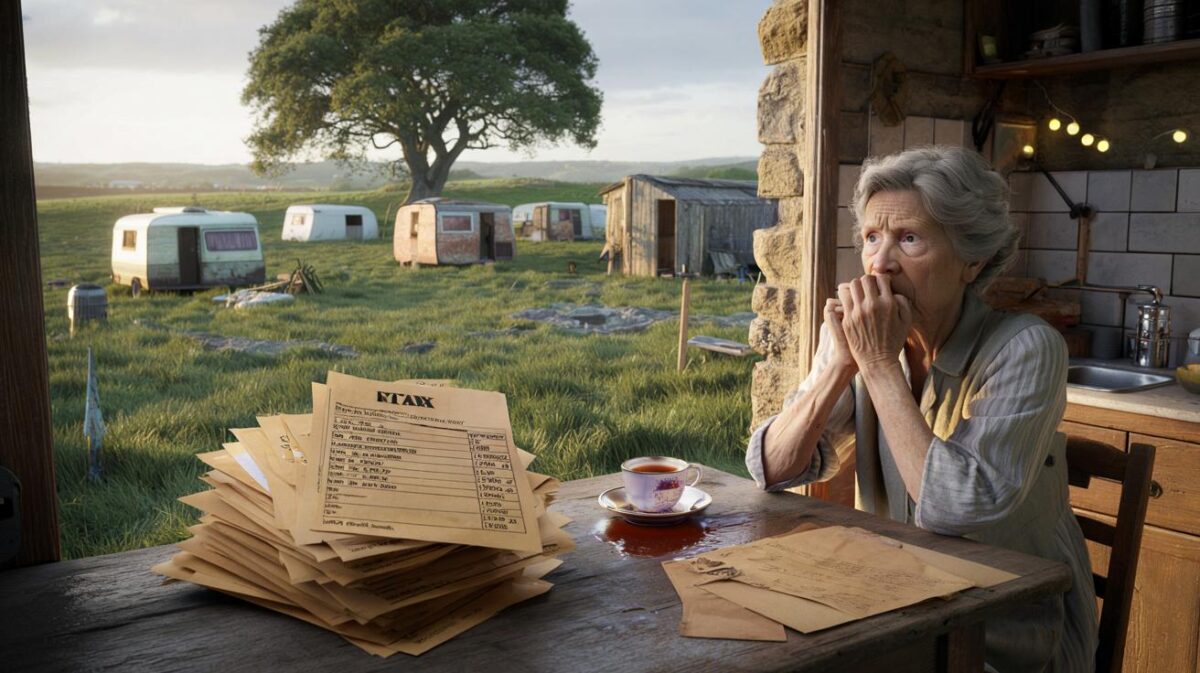
Months later, an official letter dropped into his mailbox. An agricultural tax. Payable by him. Because on paper, his land had suddenly become “agricultural use”. The bees had barely arrived, and already the trouble had started.
Some kindnesses are more expensive than they look.
When a good deed turns into a bill
The story spread first in a local Facebook group. A retiree, living on a modest pension, hits with a new agricultural tax because he had lent a bit of land to a beekeeper who needed space for his hives. No rent, no contract, nothing commercial. Just generosity and the feeling of being useful.
Yet, the tax office saw something very different. In their eyes, that quiet meadow had become productive land. A place where another person was carrying out an agricultural activity. And the person who owned the soil was the one who had to pay.
The beekeeper, meanwhile, went back to his hives like nothing had changed.
People quickly took sides. Some blamed the beekeeper: “If you use someone’s land for your business, you help pay the tax, end of story.” Others blamed the retiree: “You should never lend land without a contract today, that’s naive.”
Bits of similar stories began to appear. A neighbor who lets a farmer store hay bales and discovers a higher property tax rate. A family that allows a friend to grow vegetables and gets reclassified as agricultural land. In every case, the same pattern: a good deed on the ground, a cold interpretation on paper.
The law does not read intentions.
On the tax side, the logic is simple. The administration doesn’t look at the emotional story, only at usage: if there’s agricultural activity, even small-scale, the land can be reclassified. Reclassification means different tax rules. Different tax rules mean a bill, sometimes a big one, especially for someone retired on a fixed income.
What shocks people is not only the money. It’s the feeling of injustice. Of doing something for the collective good – bees, pollination, local food – and getting punished financially. Of discovering that kindness, when it touches land, can trigger rules that were written for industrial-size farms, not a few wooden hives at the back of a garden.
The gap between good will and legal reality feels brutally wide.
How to help without putting yourself in danger
The first reflex, when someone asks to use your land, should be almost boring: grab a notebook. Write down who’s asking, for what use, and for how long. Even a handwritten agreement, signed by both, is better than a vague “don’t worry, we’ll see”.
Ask directly: “Will this change the classification of my land? Are you already declared somewhere as a farmer, a beekeeper, a producer?” It sounds a bit stiff, especially with someone friendly, but those questions draw a line between a favor and an informal business arrangement. *A five-minute conversation can save months of headaches and letters with stamps you don’t want to open.*
➡️ Spraying vinegar on the front door : why people recommend it and what it’s really for
If the land is in your name, everything that happens on it has your name on it too. That’s the hard truth many owners discover too late. You can love bees, admire vegetables and support small producers, and still protect yourself with clear rules.
One useful habit: before you lend land, call your local town hall or tax office anonymously and describe the situation in general terms. Ask what kind of tax or reclassification could apply. Let’s be honest: nobody really does this every single day. Most of us say yes with our heart first and think about paperwork later. Yet those ten minutes on the phone can turn a blind favor into a framed, fair agreement.
“Kindness doesn’t exclude clarity,” a rural lawyer told me. “People think that adding a written agreement will ‘break the trust’. For me, it’s the opposite: it protects the relationship. When the tax letter arrives, and it often does, you already know who does what.”
- Write a simple agreement: who uses the land, for what activity, from when to when.
- Mention who pays which taxes or extra costs if the land is reclassified.
- Keep copies of any messages or emails where the use of the land is discussed.
- Ask the beekeeper or farmer if they have insurance or official status.
- Review the situation once a year: is the land still used as agreed, or has it expanded?
What this story really says about fairness and responsibility
The retiree’s case has stirred something deeper than a simple tax dispute. Around kitchen tables and on comment threads, people are really asking: when I help someone, where does my responsibility stop and theirs begin? Who should carry the cost of a good deed that becomes a legal problem: the one who owns the ground, or the one who uses it?
Some say the beekeeper should have anticipated the tax impact and offered to pay. Others argue the law should be adjusted, with thresholds for small, non-commercial activities that support biodiversity. Between these two camps, there’s a growing unease: if every gesture of kindness can trigger hidden costs, won’t we all become a bit colder, a bit more suspicious?
We’ve all been there, that moment when you hesitate before saying yes because deep down you’re thinking: “What if this comes back to bite me?” This is where the story of the retiree and the beekeeper hits so hard. It’s not just about bees, taxes or rural regulations. It’s about trust, and the invisible contract we think we have with each other when we do something **decent**.
There’s also the raw imbalance: a retiree with a fragile budget facing a beekeeper running a small but real professional activity. On paper, they’re two adults making a deal. In real life, one has far more capacity to absorb a shock than the other. That’s why people react so strongly. Deep down, many see their own parents, or their own future, in this story.
Some readers might decide never to lend land again, and that would be a loss for everyone: for nature, for local producers, for communities. A more hopeful path is possible. Clear agreements, shared costs, honest conversations before the first hive or hay bale arrives. And maybe, at a bigger level, a legal framework that distinguishes a huge agribusiness field from a few hives in a backyard.
The retiree paid his bill, with difficulty, and the bitterness will stay for a long time. The beekeeper, pressed by local outrage, finally offered **financial help**. Too late to erase the shock, just enough to calm the comments a bit. Somewhere between the buzzing of the bees and the clicking of keyboards, a quiet question remains: what do we really owe each other when we benefit from someone else’s generosity?
| Key point | Detail | Value for the reader |
|---|---|---|
| Clarify land use | Write a simple, dated agreement before any hives or crops appear | Reduces risk of surprise taxes and broken relationships |
| Ask about status | Check if the user is a registered professional and how they declare their activity | Helps foresee legal and tax consequences of the “favor” |
| Share the burden | Agree in writing on who pays extra costs if land is reclassified | Turns a vague favor into a balanced, **fair** collaboration |
FAQ:
- Question 1Can lending land for beehives really lead to higher taxes?
- Question 2How can I protect myself if I want to help a beekeeper or farmer?
- Question 3Does a handwritten agreement between two people have legal value?
- Question 4What should the user of my land contribute financially or practically?
- Question 5Is it still worth saying yes to this kind of request after stories like this?