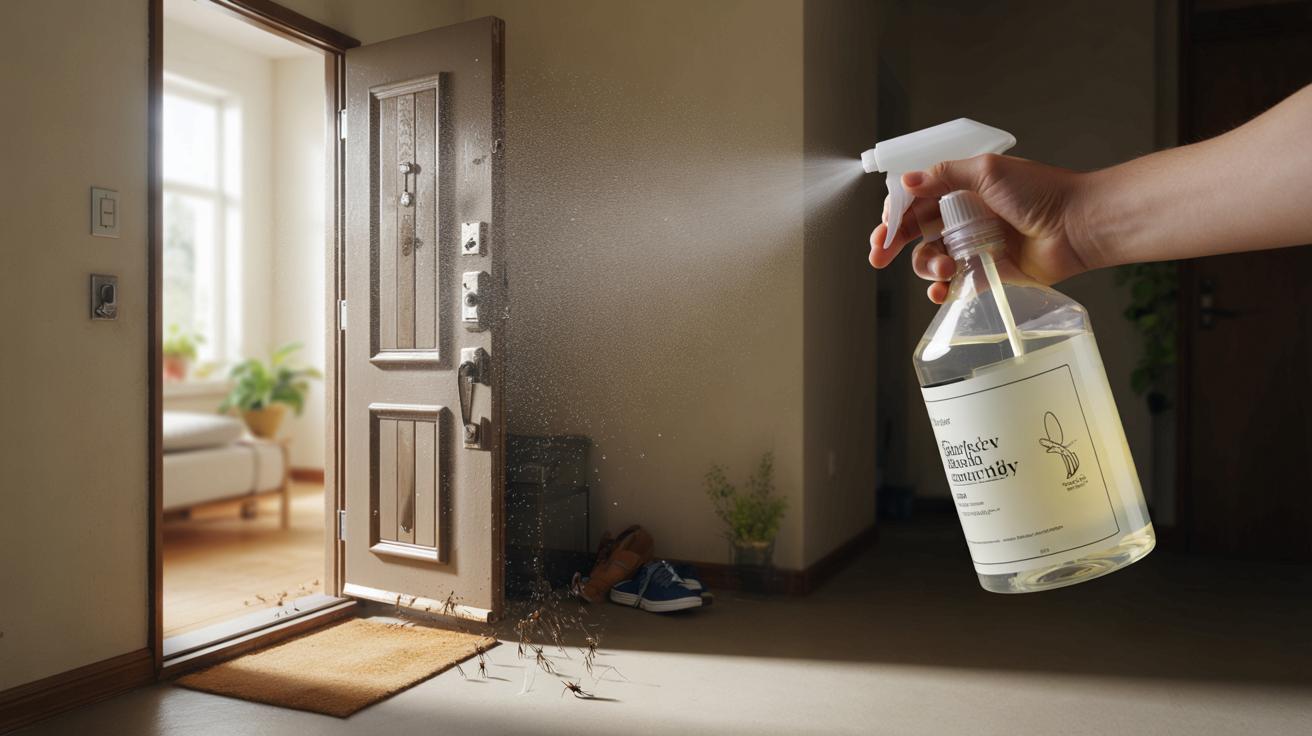
The first time I saw someone spraying vinegar on their front door, I honestly thought they’d lost a bet. It was a quiet Sunday, my neighbor in worn-out sneakers, spritz bottle in hand, carefully misting the frame, the handle, even the doormat. No cleaning bucket, no sponge. Just that sharp, unmistakable smell of white vinegar floating down the stairwell.
I watched from my peephole at first, then half-opened my own door. She caught my eye and laughed: “It keeps away way more than you think.”
That sentence stuck with me.
Because behind this weird little ritual, there’s a whole mix of beliefs, hacks and surprisingly practical reasons.
Why people are suddenly spraying vinegar on their front door
Walk through any home tips group on Facebook or TikTok and you’ll stumble on the same scene: a front door, a cheap spray bottle, and someone proudly announcing they’ve “switched to vinegar.” Some do it once a week, others every new season, a few every single day.
There’s this feeling that your door, that thin border between your private chaos and the outside world, deserves a small ritual. A reset button. For some, the front door is the most “loaded” place in the home: where arguments end, where packages pile up, where the dog scratches when it wants back in. And vinegar walks into that story as a sort of multipurpose cast member.
Scroll through the comments under those videos and you start seeing patterns. One person swears by vinegar to stop ants marching in under the threshold. Another says the smell has finally convinced neighbor’s cats to stop rubbing on their door. Someone else uses it to quickly wipe off greasy fingerprints after kids arrive from school, hands full of chocolate and dust.
A woman in her 50s explains that her grandmother in southern Italy used to sprinkle vinegar on the doorstep on days “when the energy felt heavy.” She didn’t say disinfect, she said “lighten.” It sounds mystical, but for many families it’s just tradition that quietly survived the move to modern apartments and smart locks.
Strip away the legends and you land on simple chemistry. White vinegar is acidic, so it breaks down mineral deposits, soap scum, certain germs and unpleasant smells. A front door is basically a magnet for all of that: shoes, pollution, street dust, cooking odors that leak out every time you open to cool the kitchen.
From a purely practical point of view, spraying vinegar on the door is an easy, low-cost way to sanitize the handle, freshen the area, and slightly disturb the scent trails of insects. It’s not magic, it’s pH. *But people don’t fall in love with pH — they fall in love with the feeling that they’re actively protecting their home.*
How people actually use vinegar on the door (and what works best)
The basic method is disarmingly simple. Grab a clean spray bottle, fill it with white distilled vinegar, sometimes cut with a bit of water, and spritz around the frame, threshold and handle. Some add a couple of drops of essential oil to soften the smell, others leave it pure and sharp.
You spray, let it sit for a minute or two, then wipe with a soft cloth if the surface is glossy or painted. On metal handles, a quick rub can bring back a gentle shine. On stone thresholds, people often just spray and let it air dry. The whole thing takes under three minutes, less time than scrolling through a reel about it.
The reality though: most of us don’t live inside Pinterest. We’ve all been there, that moment when you notice the streaks around the handle and think “I should clean that,” then forget instantly. Let’s be honest: nobody really does this every single day.
Some people use vinegar at the front door mainly during “problem phases.” Ants in spring? Daily spray along the bottom of the door until the little trail disappears. Smell of cigarette smoke from the hallway? Quick mist on the frame and doormat. Dog that insists on marking the same spot? Vinegar plus a proper wash helps neutralize the odor signal they’re obsessed with.
“Vinegar won’t turn your front door into an invisible force field,” jokes a professional cleaner I spoke to. “But used regularly, it cuts down germs on handles, tames odors, and sends a small message to insects that this is not a friendly path.”
What people often forget is that vinegar has limits. On some materials — like natural stone that’s sensitive to acid, certain varnishes, or delicate metal finishes — repeated spraying can dull or mark the surface. Painting a whole wooden door with straight vinegar every week is not a good idea.
To keep the ritual helpful and not harmful, many home pros stick to a simple rule:
- Use it primarily on metal handles and robust door frames.
- Test a small hidden spot first on painted or wooden doors.
- Dilute with water (50/50) for frequent use.
- Add a drop of dish soap if you’re dealing with greasy fingerprints.
- Skip it entirely on sensitive stone like marble or limestone.
Beyond cleaning: what this tiny ritual says about us
Once you’ve seen it through this lens, spraying vinegar on the front door stops looking like a random hack and more like a modern little ritual of control. A way of saying: the world outside is messy, unpredictable, noisy, but here at this border, I decide what comes in.
Some people lean into the almost spiritual side, combining vinegar cleaning with a quick rearranging of the entryway, a fresh mat, a plant by the door. Others keep it strictly practical: kids bring germs from school, delivery drivers touch the handle, so the spray bottle is their silent guard. Either way, the action is the same, but the story behind it changes everything.
| Key point | Detail | Value for the reader |
|---|---|---|
| Natural cleaner at the threshold | Vinegar disinfects handles and frames and reduces odors right where outside meets inside | Healthier, fresher entrance without expensive products |
| Targeted use against small nuisances | Regular spraying along the bottom of the door can disturb ant trails and pet-marking zones | Less invasion from insects and lingering pet smells |
| Ritual that supports a feeling of protection | A quick, repeatable gesture that signals “this space is watched and cared for” | Subtle mental comfort and a more welcoming, intentional entryway |
FAQ:
- Does vinegar on the front door really repel insects?It can disturb their scent trails, especially ants, and sometimes discourages them temporarily, but it won’t replace professional pest control for major infestations.
- Can I spray vinegar on a painted or wooden door?You can, but use a diluted mix and test a small hidden spot first; on delicate or old paint and certain woods, repeated use may dull the finish.
- How often should I spray vinegar on my door?Once a week is plenty for normal cleaning; during insect seasons or odor problems, a quick daily spritz for a few days can help without overdoing it.
- Will the vinegar smell bother guests?The smell is strong at first but fades quickly; adding a drop or two of essential oil (like lemon or lavender) can soften it while keeping the cleaning power.
- Is vinegar enough to disinfect the door handle?For everyday use, vinegar helps reduce germs and grime, though it’s not a hospital-grade disinfectant; for flu season, many people alternate with an alcohol-based cleaner.