On the edge of a quiet English village, there’s a field that everyone used to forget existed.
Grass up to the knees, a leaning oak, and a rusted gate that squeaked once a year when the hedge was cut.
That’s where Margaret, 67, widow, retired dinner lady, said yes to a small favor.
“Just for the summer,” her cousin had said, hand on heart, the way people do when they’re asking for something they know is a bit cheeky.
One old caravan, tucked out of sight, on land no one was using.
No contract, no lawyers, no money.
By the time the first complaint letter arrived from the council, there were eight caravans, a compost toilet, a fairy-light “reception”, and a booking calendar full of London weekenders.
The favor had become a business.
And the bill had finally arrived.
When one caravan quietly multiplies
The first time Margaret saw a second caravan roll in, she didn’t say a word.
Her cousin waved, shouted something about “a mate staying just a few nights”, and the tractor rattled away.
It felt awkward, but not dangerous.
They were family, after all.
He slipped her £50 in cash “for the electricity”, and she tucked it in the biscuit tin, still not calling it rent.
By late August, the field looked like a budget festival.
Kids on scooters, folding chairs everywhere, a fire pit smouldering under the stars.
Locals started noticing strangers at the village shop, asking for directions to “Margaret’s place”.
Her unused corner of land had become a destination.
She was the last one to see it.
The real turning point came when the caravans stopped leaving.
The “summer favor” ran straight into autumn, then winter, then the next Easter.
➡️ Spraying vinegar on the front door : why people recommend it and what it’s really for
A shower block arrived on a flatbed.
Someone wired up extra cables to the farmhouse fuse board without asking.
Her electricity bill doubled, then tripled.
One guest posted a glowing review on a travel forum, calling it a “secret rural micro-campsite”.
Bookings spread by word of mouth and WhatsApp groups.
Strangers pulled up at the gate as if they owned the lane.
Margaret still wasn’t calling it a campsite.
The council, once they finally took a look, called it **an unauthorised change of land use**, liable for business rates, planning breaches, and years of backdated tax.
Suddenly, a rusty caravan was a six-figure problem.
On paper, the rules are clear.
Using land for camping more than a set number of days a year usually needs planning permission, safety checks, and registration for tax.
In real life, generosity doesn’t come with a checklist.
Saying yes to a cousin feels nothing like “opening a commercial enterprise”.
It feels like you’re helping someone who needs a break while your field is just sitting there doing nothing.
The clash comes when the state sees activities, not relationships.
Where Margaret saw family, the council saw **an unlicensed, income-generating micro-business**.
Land that was “just a field” in her head had, on official records, become a taxable site with a growing paper trail.
The law doesn’t care how the story started.
It only cares what’s standing on the ground today.
Drawing the line between kindness and a contract
If there’s a quiet lesson in Margaret’s field, it’s this: the moment something stays, grows, or repeats, you need to name it.
Is it a favor, or is it a rental, a business, a partnership?
One practical move changes everything.
Write down what’s allowed and for how long, even if it’s on a notepad at the kitchen table.
“From 1 June to 31 August, one caravan, no subletting, no guests, no payment.”
That small act turns vague goodwill into a simple agreement.
It gives you a reason to say, “We wrote it down, this isn’t what we agreed.”
It also makes you pause and think before you nod along to “just one more caravan”.
Naming things protects both sides.
That’s the unglamorous truth.
Most people don’t do any of this.
We say yes on the doorstep, tell ourselves it’s temporary, and hope for the best.
The biggest mistake is confusing sympathy with responsibility.
You might feel sorry for a cousin who just split up with their partner, or a friend battling rent rises, and your empty land looks like an easy solution.
Then the edges start to blur.
They invite a friend for a weekend, plug into your water, leave a trailer “just until they sort something out”.
Suddenly, it’s not one person on your land, it’s a small community, with opinions, habits, and cars permanently parked on your track.
It’s easy to feel guilty for wanting your space back.
Yet deep down, you know something’s off when you start avoiding your own gate.
Let’s be honest: nobody really reads the planning rules before saying yes to family.
“I thought I was just being kind,” Margaret told a parish meeting, voice cracking over the microphone.
“I didn’t get a penny from those bookings. I just didn’t want a row.”
Her cousin, sitting two rows back, stared at the floor.
The fallout has been ugly.
Villagers complained about traffic, rubbish, late-night music.
The parish council split between those who blamed the “greedy cousin” and those who whispered that Margaret must have known.
Some neighbours stopped saying hello.
Others slipped advice through her letterbox.
One simply wrote, *“Get a solicitor. Yesterday.”*
- Know your land’s status – Check if it’s agricultural, residential, or mixed use before allowing anything long-term.
- Set a time limit – Put clear start and end dates in writing for any favor involving space, vehicles, or structures.
- Ban subletting in plain words – State that no one can invite guests, host paying visitors, or list your land online.
- Keep an eye on “creep” – Extra caravans, extra cars, new structures: each one changes your legal and social risk.
- Talk early, not angrily – The longer you stay silent, the harder it becomes to reset boundaries without a blow-up.
When the bill lands on the kitchen table
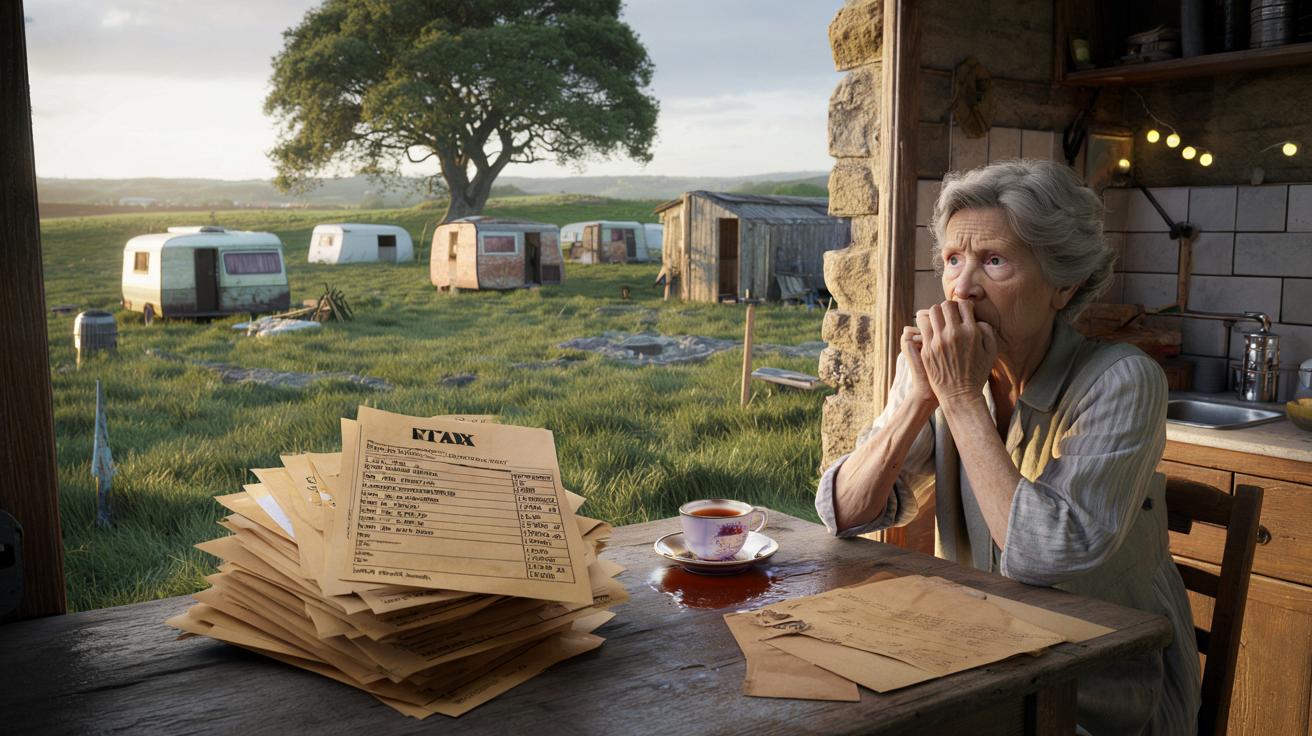
The back-tax letter arrived on a Tuesday, thick and heavy, with the brown window of doom.
Rates, penalties, potential fines, a schedule of unpaid business taxes Margaret didn’t even know existed.
She read it twice, then a third time, gripping the table so hard her tea spilled.
On one page, a cold line of numbers added up to more than the value of her car and her savings combined.
The word “enforcement” appeared three times.
Her cousin’s reaction?
“That can’t be right, they’re just having a go. We’ll appeal.”
But there was no “we” on the letter.
Only her name, her address, her field.
The village WhatsApp groups hummed with half-truths.
Some said she’d been “running a cash campsite for years”.
Others insisted the council were bullies, out of touch with rural life.
She tried to explain that the online bookings, the cash handovers, the PayPal payments from unknown surnames had all bypassed her.
The system didn’t really care whose phone the bookings came through.
The activities were happening on her land.
That’s the quiet horror for many landowners lulled into “just letting them stay”.
Responsibility flows toward whoever owns the ground, not whoever shouts the loudest at a parish meeting.
And once the machine starts moving – council, tax office, enforcement teams – it rarely moves backwards quickly.
There’s a deeper question beneath the paperwork that no official form can answer.
Who gets to decide what happens on private land: the owner’s kindness, the family’s needs, the village’s comfort, or the state’s rules?
Rural communities have long survived on informal deals.
A trailer in a barn, a friend’s horse in a back field, a nephew living in a static caravan “until he’s sorted”.
Those quiet arrangements keep people afloat when the formal housing system fails them.
At the same time, neighbours living next to a surprise micro-campground feel invaded and unheard.
They didn’t sign up for transient holidaymakers, headlights at midnight, dogs off leads in lambing season.
The plain truth is that both sides are right, and the law isn’t built for gray areas of kindness.
Someone always ends up carrying the weight.
This time, it’s a widow who thought she was just saying yes to family.
| Key point | Detail | Value for the reader |
|---|---|---|
| Hidden legal lines | Repeated or long-term use of land can trigger planning, tax, and safety obligations. | Helps you spot when a “favor” is drifting into regulated territory. |
| Write the favor down | Simple written limits on time, use, and guests protect your boundaries. | Gives you a clear basis to say no before things escalate. |
| Watch social pressure | Family loyalty and village norms can silence owners who feel uneasy. | Normalises speaking up early without feeling cruel or selfish. |
FAQ:
- Question 1Can I let someone park a caravan on my land without any paperwork at all?For very short stays and genuinely occasional use, many people do exactly that, quietly and without trouble. Once it becomes regular, long-term, or involves different people coming and going, you’re stepping into planning, safety, and tax territory.
- Question 2Who is legally responsible if things go wrong on my land?In most cases, the landowner carries the main legal responsibility, especially in the eyes of councils and tax authorities. Agreements with relatives or friends might help socially, but official bodies look first to the person whose name is on the title.
- Question 3What’s the biggest early warning sign that a favor is turning into a business?Money and repetition. If people start paying regularly, if strangers are arriving, or if the “temporary” use rolls past a season, you’re no longer in simple-favor territory.
- Question 4How can I say no to family without blowing everything up?Blame the rules, not your feelings. You can say, “I’ve checked, and this puts me at real legal risk. I can’t afford fines or a tax investigation.” It’s less about whether you like them, more about what your position allows.
- Question 5Is it ever safe to be generous with land or space?Yes. Generosity doesn’t have to disappear, it just needs a frame. Clear time limits, written terms, and a shared understanding of “no guests, no subletting, no online ads” let you help without silently gambling your future on a handshake.